AWARENESS OF TRAFFIC SIGNALS

Enrollment No. :-A20405221181
*Aim of the blog :- To give information about traffic signals & accidents
AWARENESS OF TRAFFIC SIGNALS &
ACCIDENTS
TEAM MEMBER:-
At first i want to introduce my self first my name is BUKKE.RAJESHNAIK iam form ANDHRA PRADESH .now iam doing b.tech 1st year (cse) at AMITY UNIVERSITY JAIPUR ,which college was highly demanded and it is a good university which i was studying .Now iam introducing about TRAFFIC SIGNALS AND ACCIDENTS .
What are Traffic Signal Rules?
As mentioned, traffic signal rules are meant to keep the flow of traffic smooth and consistent, so that you can reach your destination. Traffic signals are mostly found at intersections or places where regulation of traffic is necessary. Rules associated with traffic signals are very simple and easy to understand, for example:
Red light at the traffic signal means to stop or to bring your vehicle to a complete halt; this is done to let the other side of the traffic flow.
Yellow signal means that you have to slow down your vehicle before the signal turns red.
Lastly, the green signal means to go, however you should check the intersection to see if any vehicle is still crossing.
These are the basic traffic signal rules that should immediately come to your mind as soon as you see these lights. Failure to follow these rules will result in a penalty or worse result in an accident.
Traffic Signal Rules
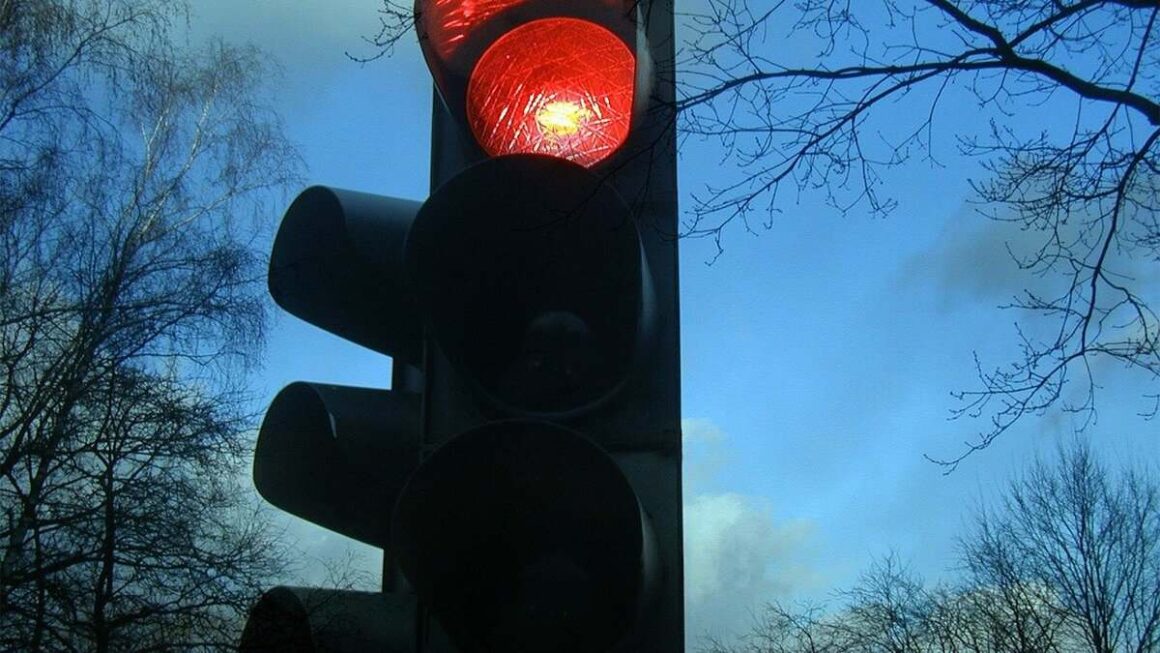
Red Light – The color red is associated with emergency and critical situations, and on the road it means that you should stop your vehicle immediately. Stopping of traffic is usually done to let the traffic on the other side of the road to pass. Jumping the red light means crossing the intersection when the red light is on. Never ever do so as it will put your life in danger as well as put others in harm’s way. Not following the rule can result in a penalty.
Flashing Red Light – You’ll encounter this light mostly in the early hours at intersections when there is little or no traffic. You also see it at railway crossings. The flashing red light indicates to stop, see and proceed.
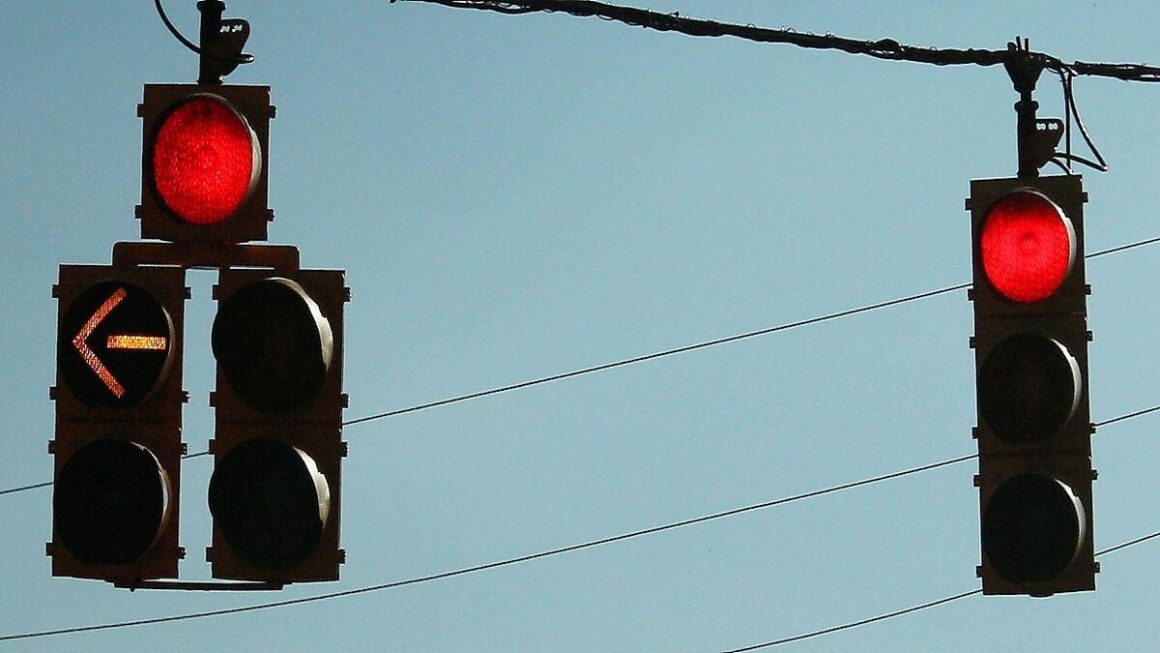
Red Arrow – A red arrow indicates that you cannot proceed on the road in that particular direction.
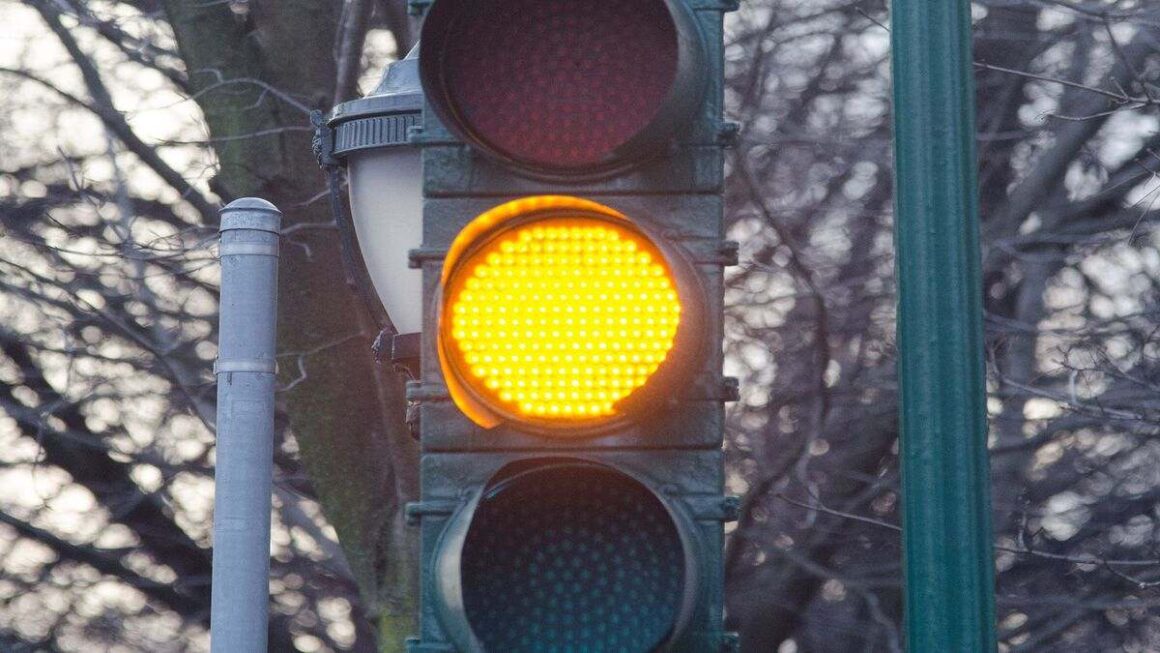
Yellow Light – The yellow light on traffic signals is a warning light, it is used for two purposes; one to indicate that you should slow your vehicle and prepare to stop for the red light,But if you have already crossed the intersection you should continue driving. Its second purpose is to prepare you to get ready to go on the green signal.
Flashing Yellow Light – Also to be seen at intersections at hours when traffic is not much. A flashing yellow light indicates that you should slow down before proceeding.
Yellow Arrow – A yellow arrow indicates that you should either get ready to move or prepare to stop.
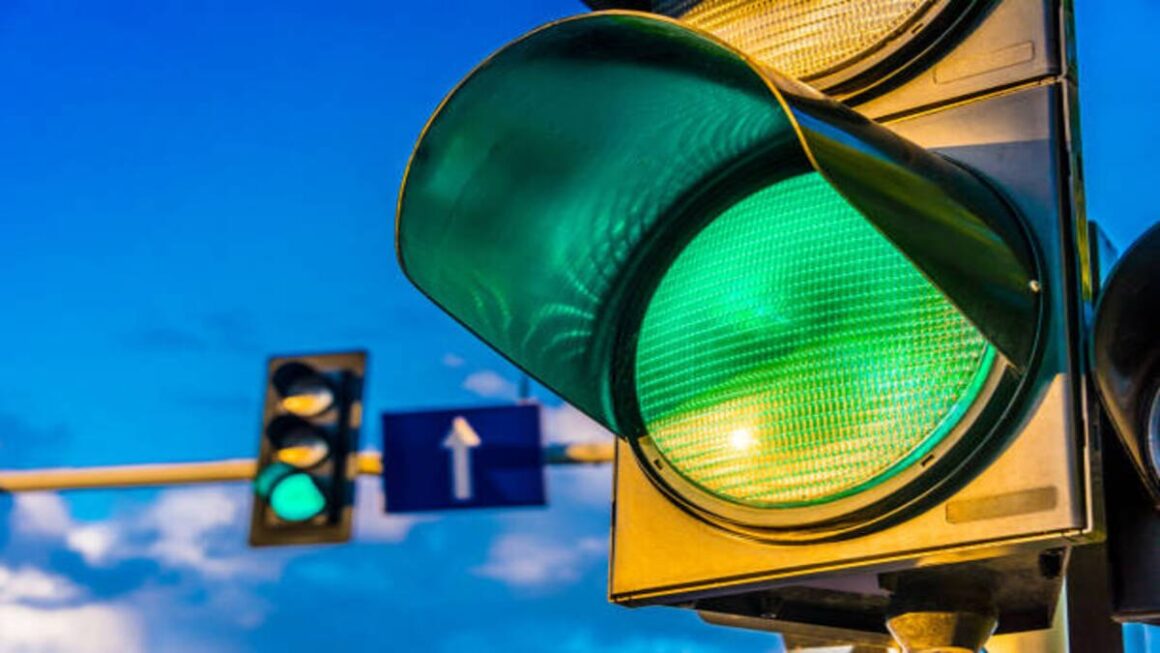
Green Light – The green signal indicates that the traffic on the opposite side of the road has been halted and it is safe for you to drive. Although, it is best to inspect the road for any passing vehicle before you go ahead.
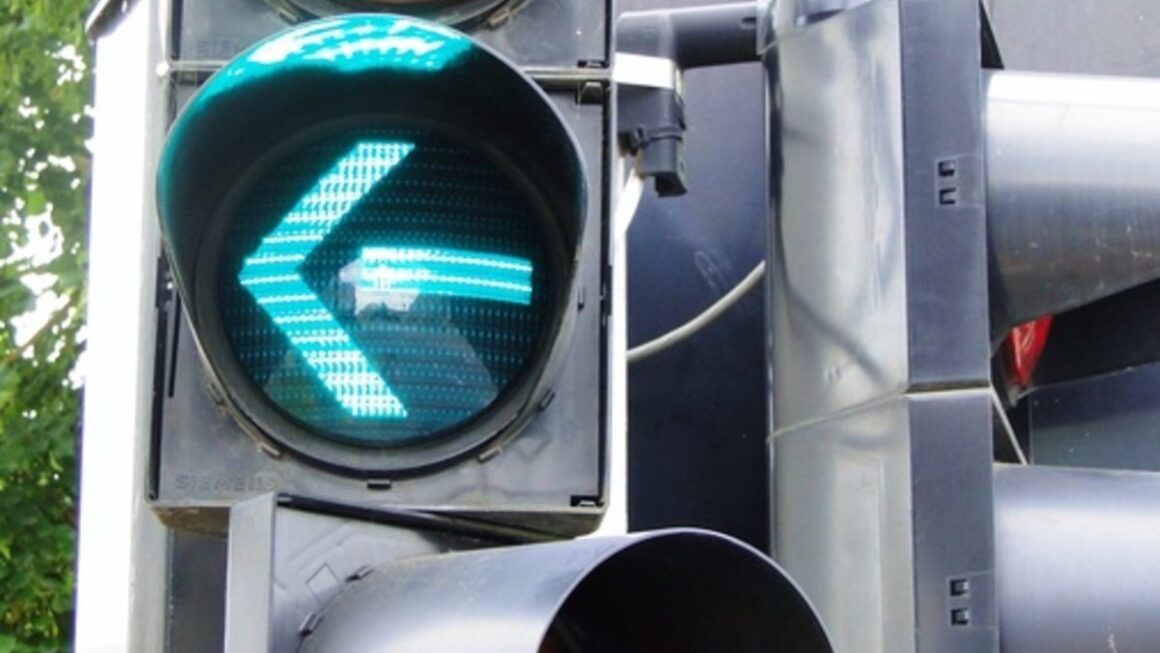
Green Arrow – A green arrow indicates that the road in that particular direction is free and you can continue driving.
Precautions to follow at traffic signals
- Stop your vehicle before the zebra crossing – Always remember that pedestrians have the right of way if they are on a zebra crossing, let them cross first.
- Seat belt always on – Your seat belt should always be on whether you are stopping or driving.
- Stay in the middle lane – Try not to swerve to the left or right if you intend to go straight, you might block someone who intends to go in that direction.
- Do not honk, have patience – It is annoying to honk, plus it creates noise pollution which is not good for anyone.
- Always look before crossing – Looking for vehicles passing by before you move is a good driving habit.
TRAFFIC SIGNS

Traffic signs or road signs are signs erected at the side of or above roads to give instructions or provide information to road users. The earliest signs were simple wooden or stone milestones. Later, signs with directional arms were introduced, for example the fingerposts in the United Kingdom and their wooden counterparts in Saxony.
With traffic volumes increasing since the 1930s, many countries have adopted pictorial signs or otherwise simplified and standardized their signs to overcome language barriers, and enhance traffic safety. Such pictorial signs use symbols (often silhouettes) in place of words and are usually based on international protocols. Such signs were first developed in Europe, and have been adopted by most countries to varying degrees.
TRAFFIC ACCIDENTS \COLLISIONS:-

A traffic collision, also called a motor vehicle collision, car accident or car crash, occurs when a vehicle collides with another vehicle, pedestrian, animal, road debris, or other stationary obstruction, such as a tree, pole or building. Traffic collisions often result in injury, disability, death, and property damage as well as financial costs to both society and the individuals involved. Road transport is the most dangerous situation people deal with on a daily basis, but casualty figures from such incidents attract less media attention than other, less frequent types of tragedy.
A number of factors contribute to the risk of collisions, including vehicle design, speed of operation, road design, weather, road environment, driving skills, impairment due to alcohol or drugs, and behavior, notably aggressive driving, distracted driving, speeding and street racing.

In 2013, 54 million people worldwide sustained injuries from traffic collisions. This resulted in 1.4 million deaths in 2013, up from 1.1 million deaths in 1990. About 68,000 of these occurred in children less than five years old. Almost all high-income countries have decreasing death rates, while the majority of low-income countries have increasing death rates due to traffic collisions. Middle-income countries have the highest rate with 20 deaths per 100,000 inhabitants, accounting for 80% of all road fatalities with 52% of all vehicles. While the death rate in Africa is the highest (24.1 per 100,000 inhabitants), the lowest rate is to be found in Europe (10.3 per 100,000 inhabitants)
A multiple vehicle collision (colloquially known as a pile-up, multi-car collision, multi-vehicle collision, or simply a multi) is a road traffic collision involving many vehicles. Generally occurring on high-capacity and high-speed routes such as freeways, they are one of the deadliest forms of traffic collisions. The most disastrous pile-ups have involved more than a hundred vehicles
Causes\Issues
Pile-ups generally occur in low-visibility conditions as drivers on freeways are sometimes caught out by driving too close to the vehicle in front and not adjusting to the road conditions.
Chain-reaction crashes can also occur in conditions of good visibility, when black ice or other road hazards are encountered unexpectedly as drivers round a curve or crest a hill.
Another possibility is a third vehicle is simply too close to the initial collision to avoid hitting one or both of the vehicles. Due to the high traffic speeds on the road, if one car develops a problem and suddenly halts, those behind it cannot stop in time and may hit it. Considering that these roads often have high traffic volumes, more cars are forced into braking and skidding, darting into other lanes and in front of oncoming traffic and so more vehicles become involved, creating a chain reaction effect.
Determining the cause of such collisions is difficult for investigators and it is often impossible to tell if negligence caused the crash. In spite of their frequency, little formal research has been done in the United States regarding their cause or causes
CONCLUSION:-
Traffic laws are designed to protect you and other drivers on the road. If we do not follow them we are not only putting ourselves at risk but also innocent bystanders and drivers. By knowing the rules of the road, practicing good driving skills and generally taking care as a road user, you help play a vital role in preventing a crash.
HOPE IT HELPS

" SPEED TRILLS BUT ALSO KILLS ! "
THANK YOU
- by RAJESH NAIK
Comments
Post a Comment